
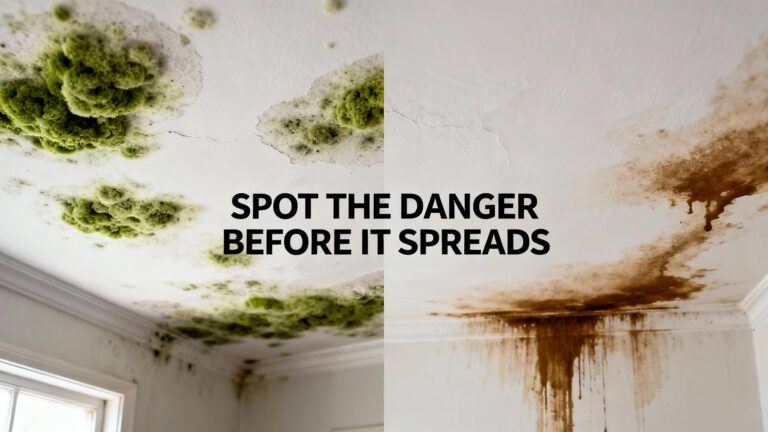
You know that sinking feeling when you walk into a room and something just feels off? Maybe there’s a musty smell, or you notice a dark patch spreading across your ceiling. Your first thought might be water damage, but here’s the thing – what you’re seeing could actually be mold, or it might be both. Understanding the difference between mold vs water damage isn’t just about protecting your home’s value; it’s about safeguarding your family’s health. These two issues often go hand in hand, but they require different approaches to fix. Let’s break down the telltale signs so you can tackle the problem head-on before it spirals out of control.
The Visual Clues That Tell the Real Story
Water damage typically announces itself with obvious signs – think discolored patches, water stains, or that telltale yellowing on walls and ceilings. The marks usually have defined edges and might look like coffee stains spreading across a white shirt. They’re often brown, yellow, or even copper-colored, depending on what’s in your water supply.
Mold, on the other hand, has its own distinct appearance. It’s fuzzy or slimy, and it comes in various colors beyond the stereotypical black. You might spot green, white, or even orange patches. The texture is what really sets it apart – water stains are flat, while mold has dimension. It’s actually growing on the surface rather than just discoloring it.
Here’s something interesting: you can have water damage without mold, but you rarely have mold without some moisture issue lurking beneath. They’re connected, but not identical twins.
The Smell Test Never Lies
Your nose knows more than you think. Water damage, especially when fresh, might smell damp or musty, but it’s usually a milder scent. Sometimes you won’t smell anything at all if the damage is relatively new or surface-level.
Mold has that unmistakable earthy, musty odor that sticks in your nostrils. Some people describe it as smelling like wet socks or rotting wood. Once you’ve smelled mold, you’ll never forget it. If you walk into a room and immediately wrinkle your nose, chances are you’re dealing with more than just water damage.
The intensity matters too. A faint musty smell might indicate early-stage moisture problems, while a strong, overwhelming odor suggests established mold colonies that have been growing for a while. Don’t ignore your sense of smell – it’s often the first warning system your body has.
Touch and Texture Differences
This is where things get tactile, though I’ll add a quick caveat: if you suspect mold, don’t go touching it with your bare hands. But observing the texture tells you plenty.
Water-damaged areas often feel soft, spongy, or swollen. Drywall might crumble when you press it gently, and wood can feel warped or buckled. The material itself has absorbed moisture and changed structurally.
Mold-affected surfaces might feel slimy or fuzzy. The mold sits on top of the material, creating a coating that’s distinctly different from the underlying surface. You might notice that painted walls are bubbling or peeling, which happens when mold grows between the paint and the wall surface.
Location Patterns Tell Different Tales
Water damage follows gravity and building design. You’ll find it directly beneath leaky pipes, under windows during heavy rain, or spreading downward from roof leaks. The pattern makes logical sense when you trace it back to its source.
Mold vs water damage becomes clearer when you look at growth patterns. Mold spreads in irregular patches and can appear in seemingly random spots because it follows moisture and air currents, not just water flow. You might find it in corners where air circulation is poor, behind furniture pushed against exterior walls, or in that bathroom that never quite dries out.
Basements and crawl spaces are prime real estate for both issues, but mold particularly loves these dark, damp environments. If you’re seeing growth spreading across multiple surfaces that aren’t directly connected by water flow, you’re probably looking at a mold problem.
The Timeline Factor
Water damage can happen instantly – a burst pipe floods a room, and boom, you’ve got visible damage within hours. The discoloration and warping show up quickly, making the problem obvious.
Mold is sneakier. It needs time to establish itself, usually 24 to 48 hours of continuous moisture exposure before spores start germinating. This means you might deal with water damage today and not see mold for several days or even weeks. But once it starts growing, it can spread surprisingly fast under the right conditions.
This timeline difference is crucial for remediation. Fresh water damage might be salvageable with quick drying and cleaning. Old water damage with established mold growth requires professional intervention and possibly removing affected materials entirely.
Health Symptoms as Warning Bells
Here’s where things get personal. Your body reacts differently to these two problems, and paying attention to how you feel in different spaces can provide important clues.
Water damage alone doesn’t typically cause health issues unless the water is contaminated. However, the dampness it creates sets the stage for other problems. Mold, though, is a different beast entirely. If family members suddenly develop these symptoms when spending time in certain rooms, take note:
- Persistent sneezing, coughing, or congestion that seems worse at home
- Itchy, watery eyes or skin rashes that flare up indoors
- Headaches or fatigue that improve when you leave the house
- Worsening asthma symptoms or breathing difficulties
- A general feeling of being unwell that you can’t quite pin down
Not everyone reacts to mold exposure, but sensitive individuals, children, and people with respiratory conditions are particularly vulnerable. If you’re experiencing these symptoms and you’ve noticed suspicious patches or smells in your home, connect those dots.
The Professional Perspective
Sometimes the difference between mold and water damage isn’t immediately obvious, even to trained eyes. Water stains can hide mold growing behind walls or under flooring. What looks like simple discoloration might conceal a much bigger problem.
Professional inspectors use moisture meters to detect hidden dampness and can take samples to confirm mold presence and identify the species. Some molds are more hazardous than others, and knowing what you’re dealing with determines the proper remediation approach.
Insurance coverage often differs for these issues too. Many homeowners policies cover sudden water damage but exclude mold remediation unless it resulted from a covered peril. Getting professional documentation helps with claims and ensures you’re addressing the root cause, not just the visible symptoms.
Prevention Beats Cure Every Time
Whether you’re dealing with water damage, mold, or both, prevention is your best strategy moving forward. Keep indoor humidity below 60 percent – ideally between 30 and 50 percent. Use dehumidifiers in damp areas and ensure proper ventilation, especially in bathrooms and kitchens.
Fix leaks promptly, even small ones. That drip under the sink might seem minor, but it’s creating the perfect environment for mold to flourish. Improve drainage around your home’s foundation and keep gutters clean so water flows away from your house rather than pooling near walls.
Regular inspections catch problems early. Check under sinks, around windows, in the attic, and in the basement periodically. Look for changes in paint or wallpaper, condensation on windows, or any of those visual and olfactory clues we discussed earlier.
Taking Action When You’ve Identified the Problem
Once you’ve determined whether you’re dealing with mold vs water damage, swift action prevents the situation from worsening. For fresh water damage, remove standing water immediately and dry affected areas within 24 to 48 hours using fans, dehumidifiers, and open windows when weather permits.
For confirmed mold growth, especially if it covers more than a small area, professional remediation is usually the safest route. Disturbing mold colonies without proper containment and protective equipment can spread spores throughout your home and expose you to higher concentrations.
Document everything with photos and notes about when you first noticed the problem. This information helps professionals develop an effective treatment plan and supports insurance claims if applicable. Don’t let embarrassment or worry about costs delay action – these problems only get worse and more expensive the longer they’re ignored.
Understanding the differences between mold and water damage empowers you to protect your home and family effectively. By recognizing the distinct signs, from visual appearance and smell to location patterns and health effects, you can respond appropriately and prevent minor issues from becoming major headaches. Remember, moisture is the common denominator, so controlling humidity and addressing leaks quickly keeps both problems at bay. If you found these tips helpful, feel free to share this article with your friends and followers who might be navigating similar home maintenance challenges.


